
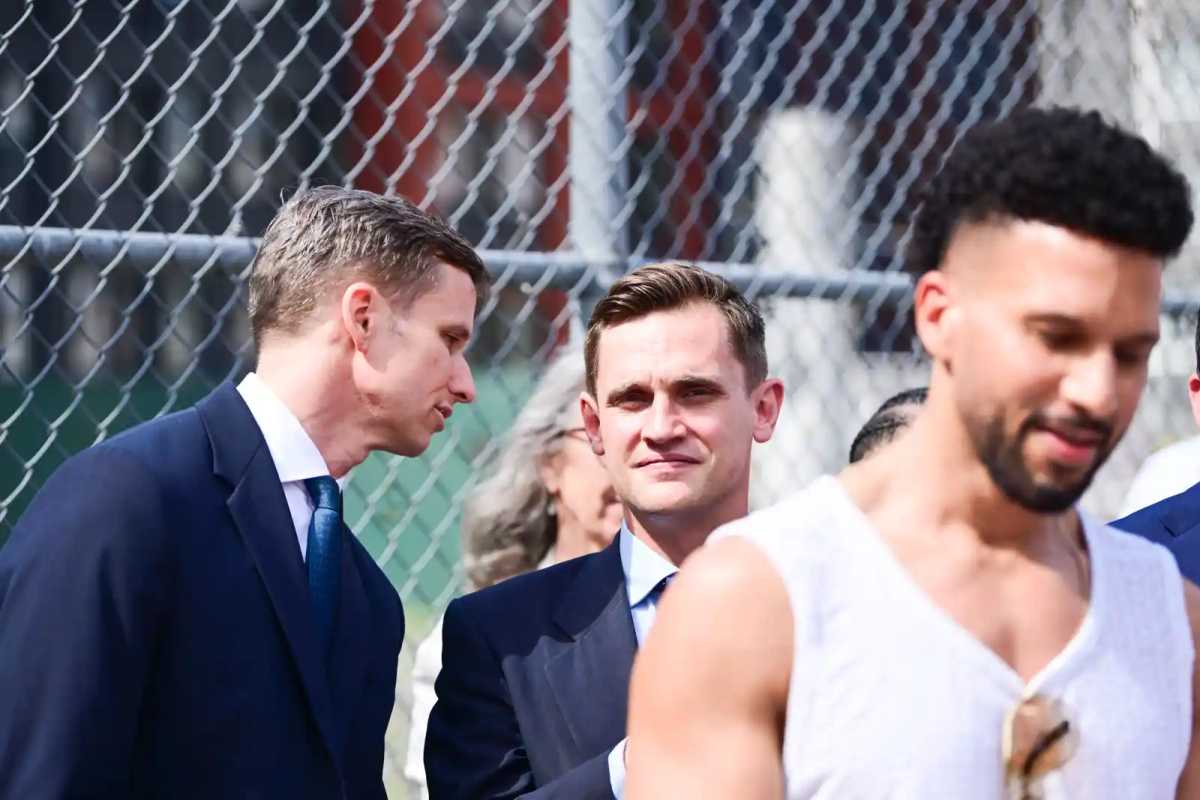
Carl Wilson, the out gay former chief of staff to State Senator Erik Bottcher, is running for a City Council seat in Manhattan’s Third District, a constituency that has sent 4 consecutive openly gay lawmakers to City Hall since 1991.
Bottcher won election to the State Senate in February, vacating a Council seat that his campaign alumni now want to keep in LGBTQ hands. Wilson’s pitch is straightforward: the district’s character matters, and he’s the candidate best positioned to defend it.
The Third District isn’t just any Manhattan seat. It includes the Stonewall Inn and the surrounding West Side neighborhoods that anchor New York’s queer political geography. The district was drawn in 1991 with explicit intent to give the community a voice on the Council. Tom Duane won that first race. Christine Quinn followed. Then Corey Johnson. Then Bottcher. That’s an unbroken line of openly gay representation stretching more than 3 decades, and Wilson’s campaign is built around the argument that it shouldn’t end now.
“This race is really about the future of the West Side, and it’s about the future of having an LGBTQ representative of this district, the birthplace of Stonewall and the modern gay rights movement, at a time when we are under immense threat from Washington, D.C.,” Wilson told supporters at a recent rally.
He doesn’t get a clear path. Wilson faces Lindsey Boylan, Layla Law-Gisiko, and Leslie Boghosian Murphy in what Gay City News has tracked as a crowded, closely watched special election. Each candidate brings a distinct profile, and the field won’t thin easily.
Boylan drew national attention in 2021 when she publicly accused then-Gov. Andrew Cuomo of sexual harassment, accusations that helped accelerate the broader political reckoning with his administration.
Then Mayor Mamdani endorsed Boylan on April 17. That move landed hard in some corners of the LGBTQ political world. A report in City and State quoted an anonymous LGBTQ consultant who said there has been “a trend of Mamdani hurting the political aspirations of gay candidates,” pointing to specific past races as evidence. The anonymous sourcing drew immediate pushback. Assembly candidate Brian Romero, who was named in the piece, publicly rejected the framing outright.
The backlash didn’t trail Mamdani long.
By April 20, multiple LGBTQ leaders had come to the mayor’s defense. Assemblymember Diana Moreno, who succeeded Mamdani in the State Legislature, posted on X that day: “I’m a queer woman who proudly received @ZohranMamdani’s endorsement to replace him in the Assembly. I’m thrilled to endorse the fearless @LindseyBoylan for City Council.” Moreno’s voice isn’t incidental here. She’s queer, she’s woven into the district’s political orbit, and her statement directly undercuts the idea that Mamdani’s record on LGBTQ candidates fits any single, damning narrative.
The mayor’s standing in the broader LGBTQ community isn’t in serious dispute. He’s been a vocal advocate since his time in the State Legislature, and this year he announced the creation of a new Mayor’s Office of LGBTQIA+ Affairs, a move that reinforced his position with activists who might otherwise have questioned the Boylan endorsement.
What the special election has exposed is how layered this district’s politics actually are. It’s not enough to have a strong LGBTQ record. Candidates and their backers are being tested on whether they can make the case that representation itself, specifically who holds the seat, carries meaning beyond policy positions. Wilson’s campaign is betting that it does.
The 17 years since the district’s boundaries were first drawn to serve the community represent more than political history. They’re the argument Wilson is running on. Four lawmakers. Four decades. The Fifth up for grabs.
Whether Wilson can consolidate the LGBTQ vote in a field that includes multiple viable candidates will determine whether that argument lands. Boylan has Mamdani and Moreno. Law-Gisiko and Boghosian Murphy are pressing their own cases. The race has no clear frontrunner, and the special election calendar leaves little room to build late momentum.