
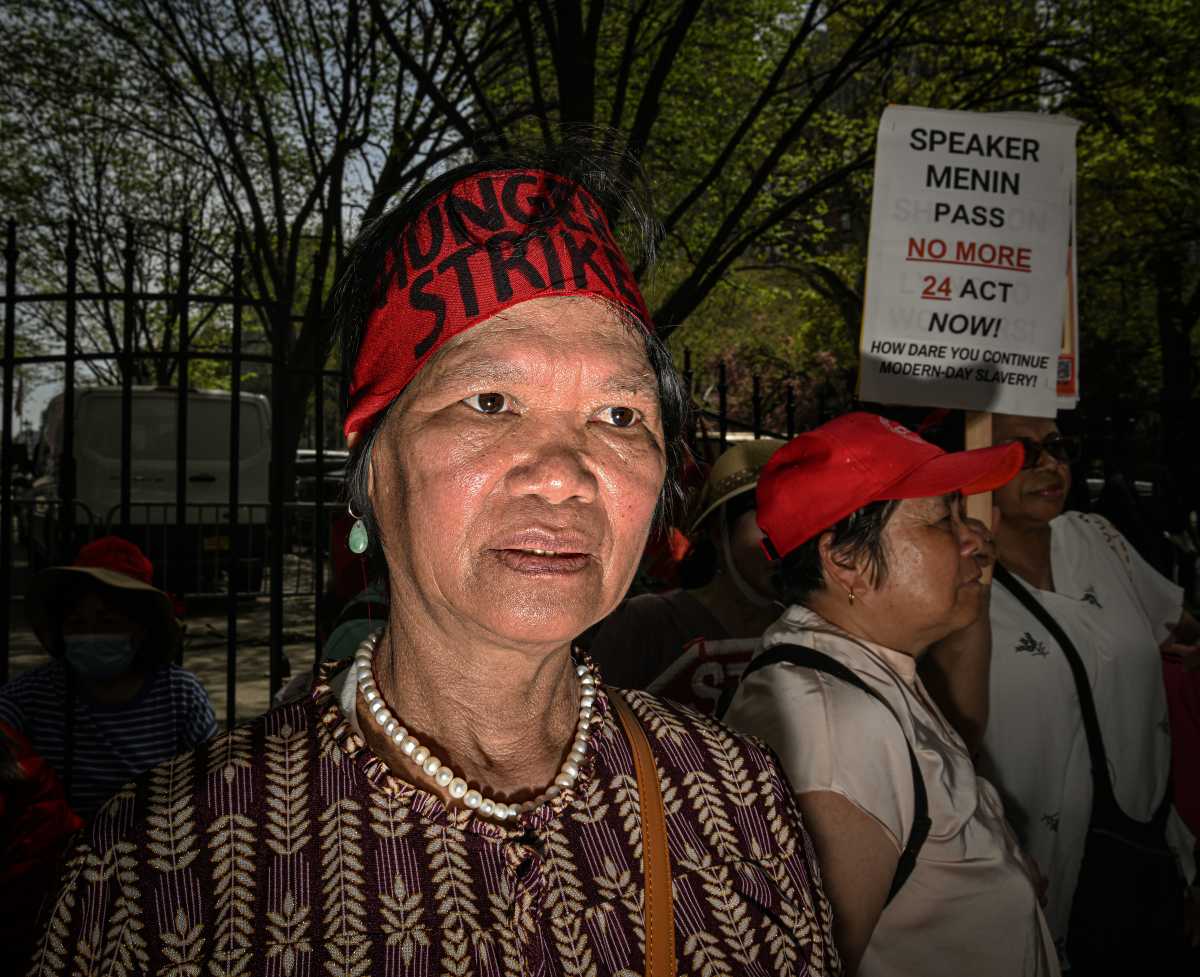
Dozens of home care workers launched a hunger strike outside City Hall on April 16, refusing food until the City Council votes to end the 24-hour workday. The workers, most of them elderly immigrant women, had already been camped on the Broadway side of City Hall for weeks before Thursday’s escalation.
Mayor Zohran Mamdani and City Council Speaker Julie Menin hadn’t moved. So the aides stopped eating.
“We have been fighting together against the 24-hour workday for a very long time,” said worker Cai Qiong Liu. “We’ve set aside our family responsibilities and jobs to take part in actions again and again. Through our hunger strike, we will clear away the dark clouds and bring back clear skies. The 24-hour work system is the root of this harm. We must eliminate it as soon as possible.”
Workers chanted “No more 24” in April heat that felt more like August, waving signs aimed squarely at Mamdani and Menin. Nothing came from City Hall.
The silence stings in ways that go beyond policy. In 2021, then-Assembly Member Mamdani camped outside City Hall himself, joining taxi drivers staging a hunger strike over crushing medallion debt. That strike worked. It raised his profile city-wide, and it’s part of how he got from Albany to Gracie Mansion. Now home care workers are at those same steps, running the same play, waiting on the man whose career their struggle helped shape.
Home care work is exactly the constituency that doesn’t get ignored when the politics are inconvenient. These aren’t workers with easy options. They’re older, they’re immigrants, they’re doing some of the most physically demanding labor in the city for pay that doesn’t reflect it. Advocates and labor groups have pointed to International Labor Organization standards for years to argue that 24-hour shifts violate basic protections. None of that moved the needle fast enough.
City Comptroller Brad Lander showed up Thursday and didn’t pretend the history wasn’t there.
“The last time I was out here with people who were going on a hunger strike was when the taxi workers facing crushing medallion debt came out here and went on strike to demand tax relief,” Lander said. “And those workers, through a brave hunger strike, won the relief to their medallion debt and were able to work and live in dignity.”
He kept going.
“That did indeed help launch the career of our elected mayor,” he told the crowd. “What we are saying to you today is thank you for your courage and your bravery, we stand alongside.”
That’s not subtle. Lander’s framing is a direct challenge to Mamdani: you rode a hunger strike to the fifth floor of City Hall, and you’re now the reason another one is happening outside it. The mayor hasn’t yet said publicly when or whether he’ll push the City Council to move the bill.
The workers aren’t waiting quietly. Cai Qiong Liu’s remarks Thursday captured what years of 24-hour shifts do to a person. You can’t sleep on a client’s couch and call it rest. You can’t be responsible for someone else’s safety at hour 22 of a shift. You can’t run a household of your own when the workday doesn’t end. The aides say their employers count on them not making noise about it, that being older immigrant women makes them easier to ignore, that nobody’s coming if they don’t come themselves.
They’ve come. They’re on the Broadway side of City Hall, in tents, not eating.
Menin’s office hadn’t put a timeline on the legislation as of Thursday. Mamdani’s office didn’t respond to requests for comment before publication. Lander, who ran against Mamdani in the Democratic primary, was the one standing at the microphone.
The City Council bill would cap home care shifts at a maximum that doesn’t require a person to work through the night and into the next afternoon. Advocates say it’s been tied up long enough. The workers on the hunger strike say they won’t leave until there’s a commitment.
April 16 was day one.