
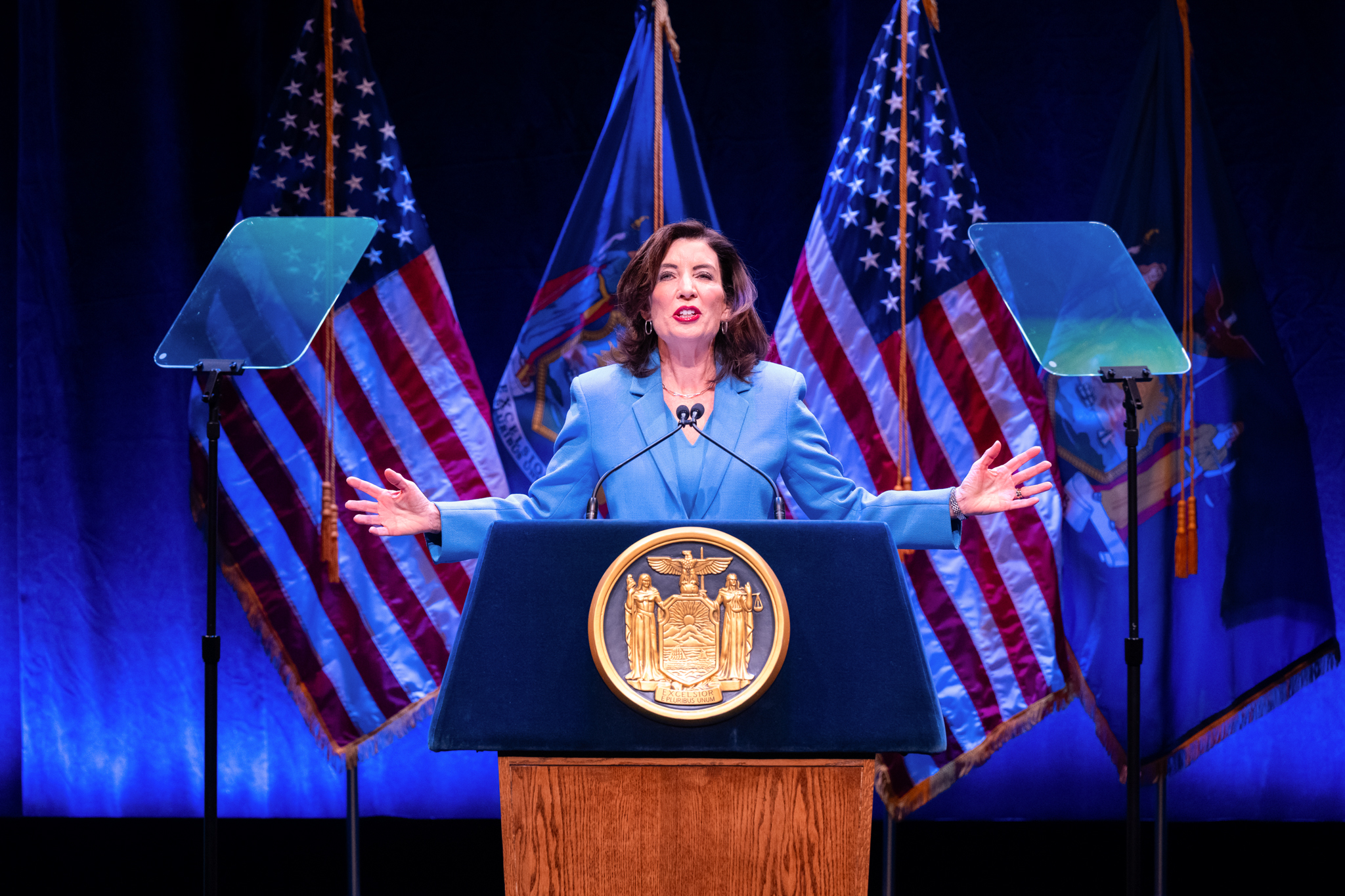
Albany blew past the April 1 deadline. More than $260 billion in public spending is now hanging in the air as negotiations over health care, housing, and climate grind through another week with no deal in sight.
The numbers alone tell you how much is riding on this. New York’s budget is bigger than every other state’s except California’s. Gov. Kathy Hochul opened at $260 billion. The Assembly came back with $266 billion. The Senate topped that with $270 billion. The final figure will land somewhere in that range, and it covers everything from road repair to health insurance for low-income residents, funded by both state taxes and federal transfers.
Don’t mistake this for a simple accounting exercise. Albany lawmakers have turned the budget into a vehicle for rewriting laws that don’t touch money at all. Last year’s deal weakened rules on how quickly prosecutors share evidence with defense attorneys and let the state shutter several prisons. This year, Hochul’s proposal would walk back key pieces of the 2019 climate law, the one that set hard deadlines for slashing carbon emissions and moving New York toward renewable energy. The advocates who spent years passing that legislation aren’t happy.
The agenda doesn’t stop there. Also up for negotiation: Hochul’s child care expansion, housing construction incentives, pension increases, and a problem that could upend the state’s entire safety net. According to The City, cuts to Federal Medicaid funding threaten to strip hundreds of thousands of New Yorkers of health coverage.
That’s not an abstraction in Brighton Beach, Flatbush, or Mott Haven. Federal Medicaid dollars run directly through community health centers, home care workers, and hospital emergency rooms across the five boroughs. When that money shrinks, the city’s safety net doesn’t bend, it cracks, faster and harder here than anywhere else in the state.
The budget document itself runs to thousands of pages. Subjects covered inside it range from automobile insurance to agricultural subsidies. Three categories pull the most weight in terms of raw spending: health care, education, and everything that keeps state government running day to day. Most legislators won’t read the whole thing. Most couldn’t tell you what’s buried in the final sections before they’re asked to vote.
That’s by design, more or less. New York’s budget process is famously closed. Three people run it: the governor, the Assembly speaker, and the Senate majority leader. They don’t hold press conferences during negotiations. They don’t publish transcripts. Rank-and-file members of the legislature, the ones actually elected to represent Brighton Beach or Mott Haven or anywhere else, often won’t see the final text until a few hours before the vote. Hearings happen earlier in the cycle, but by the time a deal is close, those public comment periods are long over.
“The budget process is not transparent,” said one longtime Albany observer who tracks fiscal policy at a state government reform organization. “It’s three people in a room and then everybody else finds out what happened.”
That’s been true for decades, and it doesn’t look like 2026 will change it. The closed structure means that when Hochul and legislative leaders decide to roll back the 2019 climate law or absorb federal Medicaid losses in a particular way, the public learns about those choices roughly when everyone else does. Which is to say, late.
Outside groups, local officials, and individual New Yorkers can file testimony, show up to hearings, and lobby their members. Some of it matters. Most of it doesn’t reach the room where the deal gets made.
The immediate question is when this wraps. Each day past April 1 without a budget means state agencies operate on continuing resolutions and contingency plans. Workers don’t get raises that were negotiated pending budget approval. Local governments waiting on state aid hold their own spending decisions. It adds up fast.
What comes next is more of what Albany does best: waiting, leaking, and eventually producing a document that runs longer than anyone expected and lands faster than anyone can read it.