
The New York City Council heard testimony Tuesday on two bills that would limit children’s social media use to 60 minutes a day, but civil liberties lawyers told the panel the legislation could land the city in federal court before the ink is dry.
The bills were introduced by Council Members Althea Stevens of the Bronx and Nantasha Williams of Queens. Anyone under 17 would face the daily 60-minute cap. A separate provision would require reports on the online activity of people under 24 enrolled in Department of Youth and Community Development programs who get into in-person altercations. The hearing ran Tuesday at City Hall.
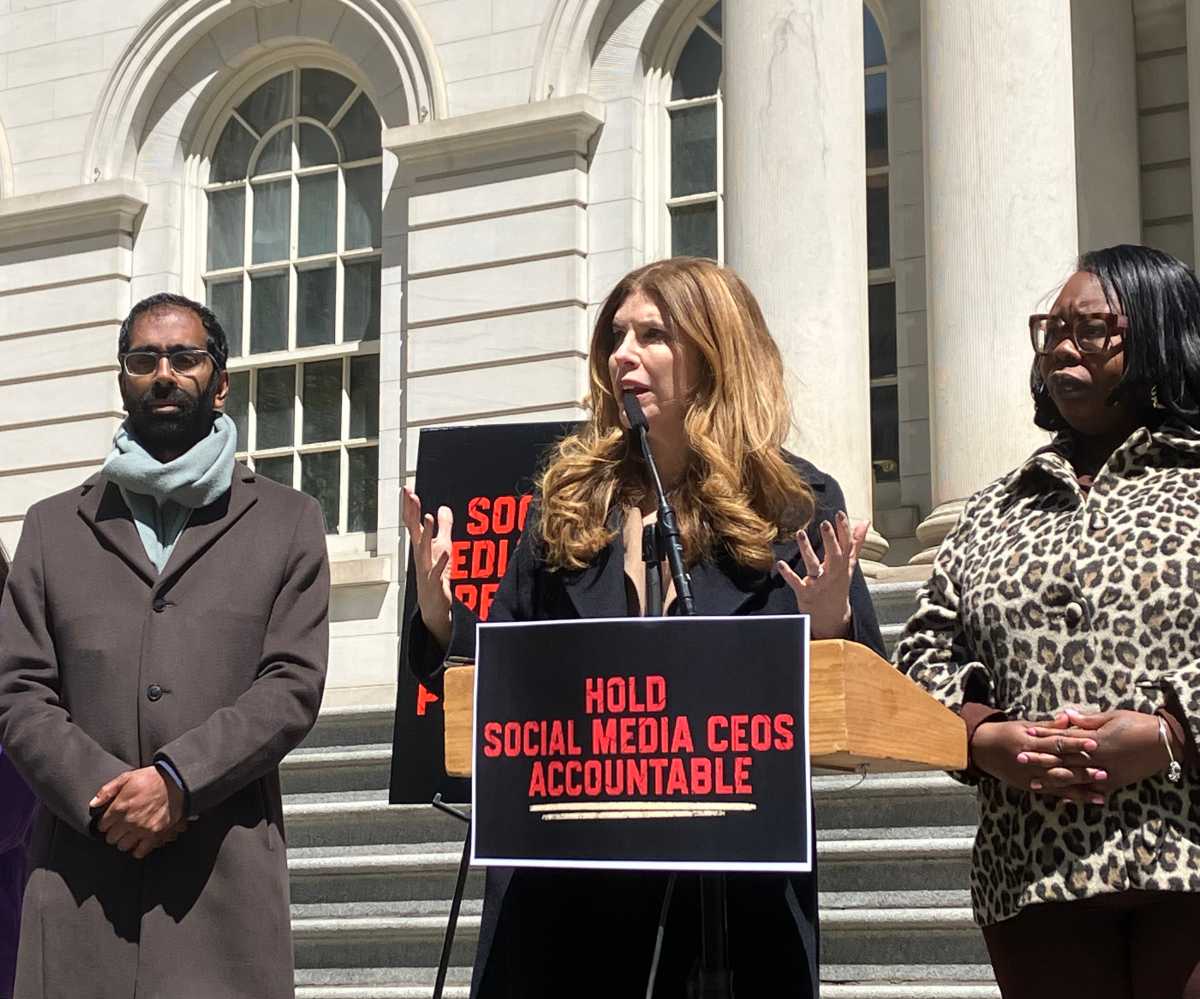
Supporters didn’t wait for the doors to open. They rallied outside beforehand, and Council Member Shekar Krishnan of Queens was in the crowd, working it. “We are here today to finally hold the billionaire social media CEOs accountable for pushing content that forces children to give them their attention,” Krishnan said. “Increasingly, that content is violent news, dangerous trends and fueling feelings of isolation and anxiety.”
City Council Speaker Julie Menin joined the rally. So did Council Members Tiffany Caban of Queens and Stevens, who pointed to studies connecting social media to deteriorating children’s mental health and said students themselves have pushed for these protections. It’s a crowd-pleasing message. The legal exposure is another matter entirely.
The sharpest pushback didn’t come from Meta or TikTok. It came from Justin Harrison, senior policy counsel at the New York Civil Liberties Union, who told reporters the bills can’t survive constitutional scrutiny. “The bill has significant constitutional problems,” Harrison told reporters. Teenagers have First Amendment rights, he argued, and those rights include reading the news, finding friends, and building community networks online. A blanket limit that cuts off all minors from all content at the same daily threshold, he said, is simply too blunt an instrument for courts to accept.
Harrison also hit the age-verification requirement. Forcing children to prove their age before accessing a platform raises privacy and surveillance questions that courts haven’t settled. That’s not a technicality. That’s the kind of open constitutional question that invites a federal injunction before a law takes effect.
The monitoring provision drew its own round of criticism. Tracking social media activity for people under 24 who’ve been involved in altercations, at the level of detail the bill envisions, is itself unconstitutional, Harrison argued. Caban said during the hearing she shares those concerns, a notable split given that she stood with the bill’s supporters at the rally beforehand.
Advocates who testified went further than the lawyers. Several warned that the reporting requirement could accelerate surveillance of young people, effectively turning program participation into a monitoring pipeline. That’s a concern with particular weight in Queens districts like Caban’s, where young transit riders and community program participants overlap considerably.
The American Psychological Association has documented links between heavy social media use and mental health declines in adolescents, and supporters of the bills leaned on that research throughout the day. But the research doesn’t resolve the constitutional question, and Harrison’s testimony made clear the city would be litigating both provisions almost immediately if either became law.
Age-verification requirements have a rough track record in federal court. States that have tried similar measures have run into First Amendment walls, and the legal landscape around VPN workarounds and parental consent frameworks is still unsettled. The city’s lawyers would be walking into an active minefield.
For more on the constitutional arguments raised during Tuesday’s hearing, see AM New York’s coverage of the hearing.
The bills now move through the council process. No vote date has been set.