
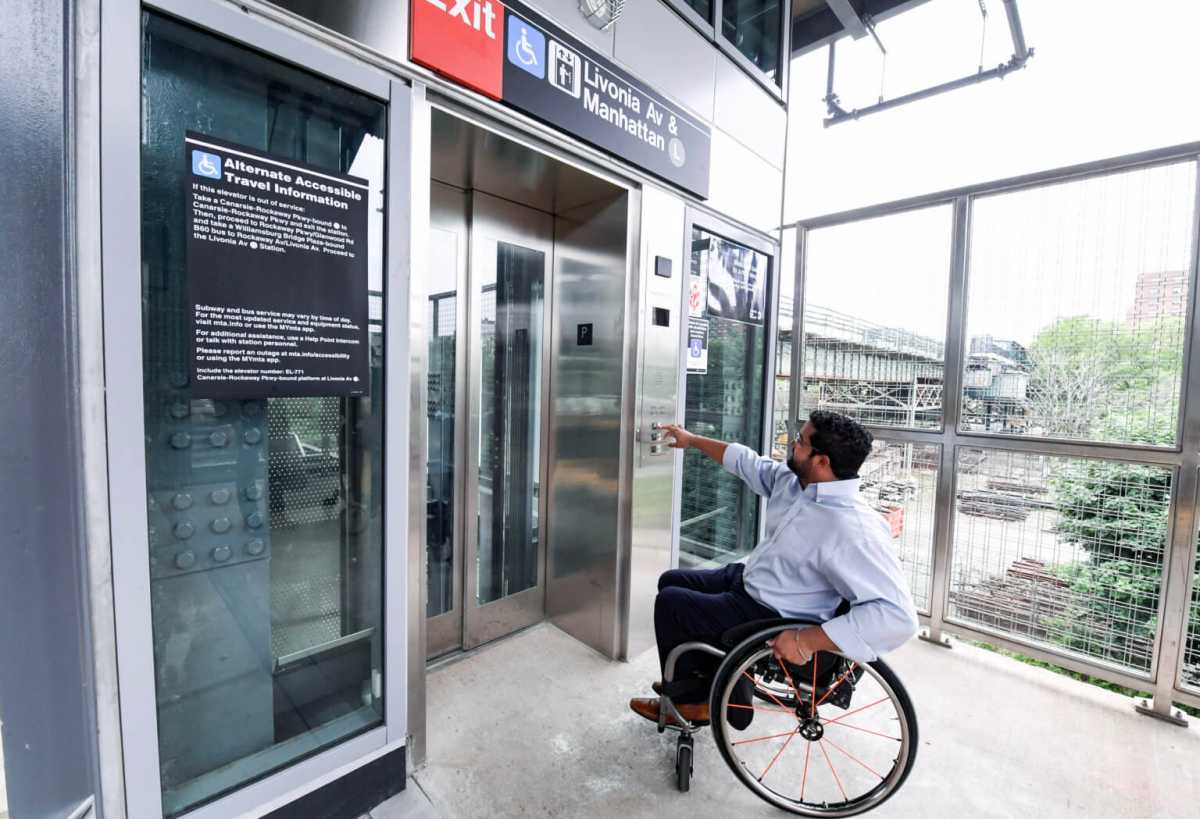
Forty stations are currently under active construction for accessibility upgrades, and the MTA isn’t waiting on Albany to write every check.
Columbia University is putting $33 million into the 125 St 1 train station, a deal that covers three new elevators plus structural work at a 121-year-old stop anchoring the university’s expanding Manhattanville campus. Columbia needed wider west-side escalators to absorb rider demand from its growing footprint. The MTA needed that station brought into compliance. One contract, shared cost, done cheaper than two separate procurements would’ve run.
That’s the model. And it’s showing up in the numbers.
This month, a new elevator opened at the 59 St-Columbus Circle station. Global Holdings didn’t just fund it. They built it, taking on construction risk at one of the system’s busiest interchange points while MTA crews stayed focused elsewhere. The station already cleared accessibility standards before the elevator went in, but the addition extends around-the-clock access. At Columbus Circle, that matters.
Quemuel Arroyo, the MTA’s Chief Accessibility Officer, and Jamie Torres-Springer, president of MTA Construction and Development, co-wrote an op-ed this week laid out the broader case for public-private deals as the agency’s sharpest instrument for closing the gap. Both men brought more than policy arguments to the piece. Arroyo has mobility needs himself. Torres-Springer spent years hauling strollers up subway stairwells as a parent. They’re not writing from a distance. “None of us should be left stranded by transit,” they said. “Using every tool at our disposal, we’re working hard to make sure everybody can get on board.”
The statistics behind that framing don’t need much spin.
Since 2020, MTA Construction and Development has made 57 stations accessible. More than in the prior decade combined. Another 40 are under construction right now. The 2025-2029 Capital Plan targets at least 60 additional subway stations, six railroad stations, and 45 elevator replacements on top of those.
When all of it’s complete, the system projects 272 fully accessible stations. That’s more than double what existed in 2019. It’s also enough to put nearly 70 percent of all subway rides within reach of an accessible station, either at the start of the trip or the end.
For riders who can’t do stairs, that 70 percent figure isn’t a branding metric. It’s the difference between getting to work and not. Brighton Beach has a station. A lot of outer-borough stops don’t, and the riders who live near those gaps feel it every morning. Older adults, people with disabilities, parents navigating a turnstile with an infant and a stroller built for a different century: they’re the ones who’ve eaten the cost of a system designed before the Americans with Disabilities Act existed.
The MTA has been under legal pressure on accessibility for years. What’s changed isn’t the pressure. It’s the pace. The 121-year-old 125 St station getting three elevators, a private developer constructing the Columbus Circle elevator outright, 57 stations made compliant since 2020: that’s a different tempo than the agency was running at in 2019.
The 2025-2029 Capital Plan is the document that will decide whether that tempo holds. Sixty subway stations, six railroad stations, 45 elevator replacements. The math points toward 272. Getting there requires construction timelines and funding commitments that survive budget cycles, political shifts, and the particular chaos of building anything underground in New York City.
Arroyo and Torres-Springer are betting the public-private model buys them enough runway to get there. Columbia’s $33 million at 125 St is one example. Global Holdings building the 59 St elevator is another. Neither is a silver bullet. Both reduce the dollar-per-station cost the MTA has to absorb from its own capital budget, which means more stations, faster.
The next test is whether the 60 stations in the 2025 plan move from a line in a capital document to shovels in the ground.