
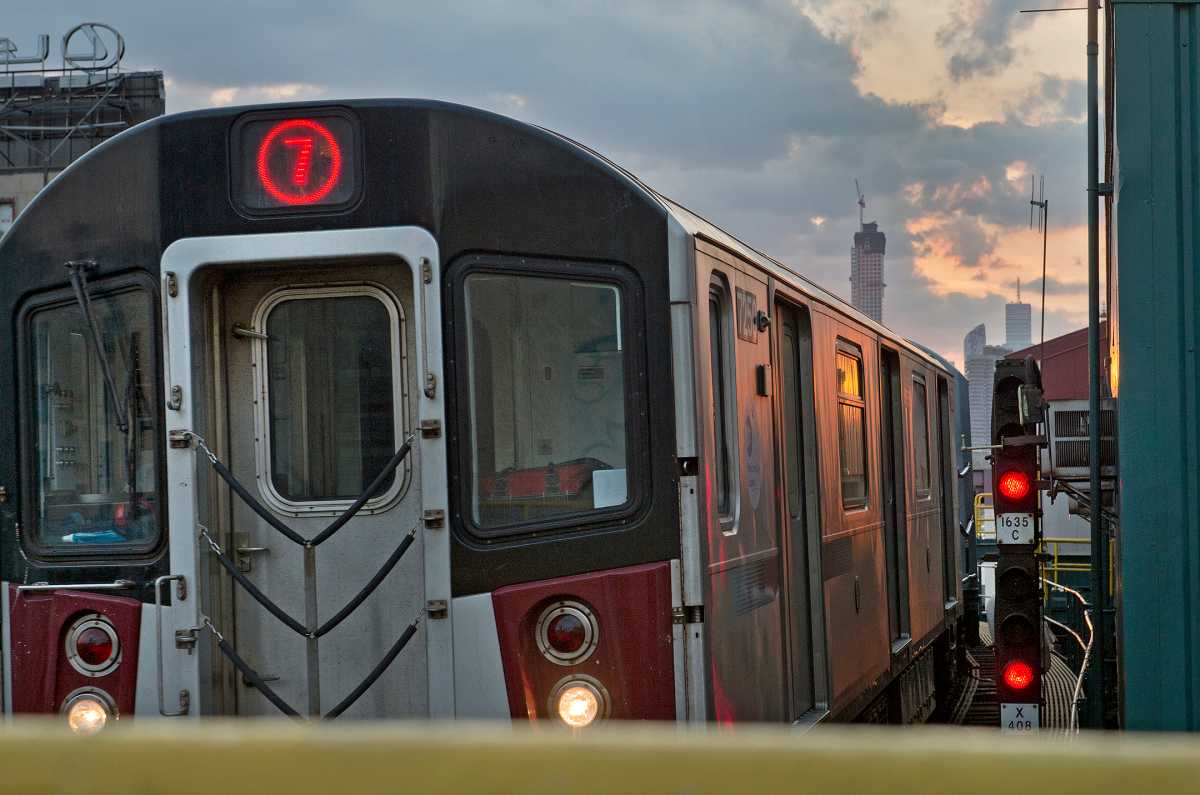
A man was struck and killed by a 7 train at the Junction Blvd station in Queens on Tuesday morning, snarling service across one of the city’s busiest commuter corridors during rush hour.
Officers from the NYPD transit bureau arrived at 7:11 a.m. to find an unconscious man on the tracks at the Manhattan-bound platform. He was pronounced dead at the scene. Police are not treating it as a crime. A witness saw the man fall, and detectives said they don’t suspect criminality. The victim’s identity hasn’t been released.
The station sits on the border of Jackson Heights and Corona, covered by the 115th Precinct and Transit District 20. It’s a busy stop on a line that carries roughly 450,000 riders daily, and a fatality there during the morning peak meant immediate chaos for commuters trying to get to Midtown.
The MTA pulled 7 train service entirely in the immediate aftermath, then restored limited operations with significant restrictions still in place through Tuesday morning, as AM New York reported. “The 7 train is running local between 74th St-Broadway and Mets-Willets Point and with delays,” an MTA spokesperson told reporters.
That’s a brutal restriction on a line that’s supposed to shoot riders from Flushing all the way into Times Square. Running local between 74th St-Broadway and Mets-Willets Point doesn’t help the bulk of Queens commuters trying to reach Midtown. Add 20 to 30 extra minutes to your ride, minimum, and that’s if you can even get on a train.
The MTA directed displaced 7 riders to the E, F, M, and R trains, which run along Queens Boulevard. Those lines can absorb some overflow on a normal day. Tuesday wasn’t a normal day. Anyone who’s squeezed onto an F train at Roosevelt Avenue during a regular rush hour knows what it looks like when a few thousand extra commuters show up because the 7 went down. The E runs express, the F and M and R run local, and none of them give riders the direct run into Times Square that the 7 provides. They’re substitutes, not solutions.
The Junction Blvd incident wasn’t the only track emergency on the system before 9 a.m. Police also responded to a separate track intrusion at the 86th Street station on the 5 line in Manhattan, within the 19th Precinct. That one ended without a fatality. The person got off the tracks before a train hit them. Two separate incidents on two separate lines, both before the morning rush cleared, and both raising the same uncomfortable question: why doesn’t New York have barriers between riders and the roadbed?
The MTA has no systemwide platform screen door program in place. The agency has moved slowly on the idea, citing the cost and the engineering complexity of retrofitting century-old stations. That’s a real constraint. It’s also cold comfort to the family of the man who died at Junction Blvd on Tuesday, or to the 11 riders who’ve been struck by trains system-wide so far this year.
Track deaths trigger a cascading operational response. Train operators hold. Controllers pull service. Dispatchers reroute. Passengers stack up on platforms seven and eight deep. The reverberations from a single fatality at one station can ripple across 24 lines for hours. Tuesday’s disruption on the 7 was still affecting service well into the mid-morning. That’s the math of running a subway system with no physical separation between people and moving trains.
The NYPD’s investigation into the Junction Blvd death is ongoing. The MTA hasn’t said when full express service on the 7 will be restored.