
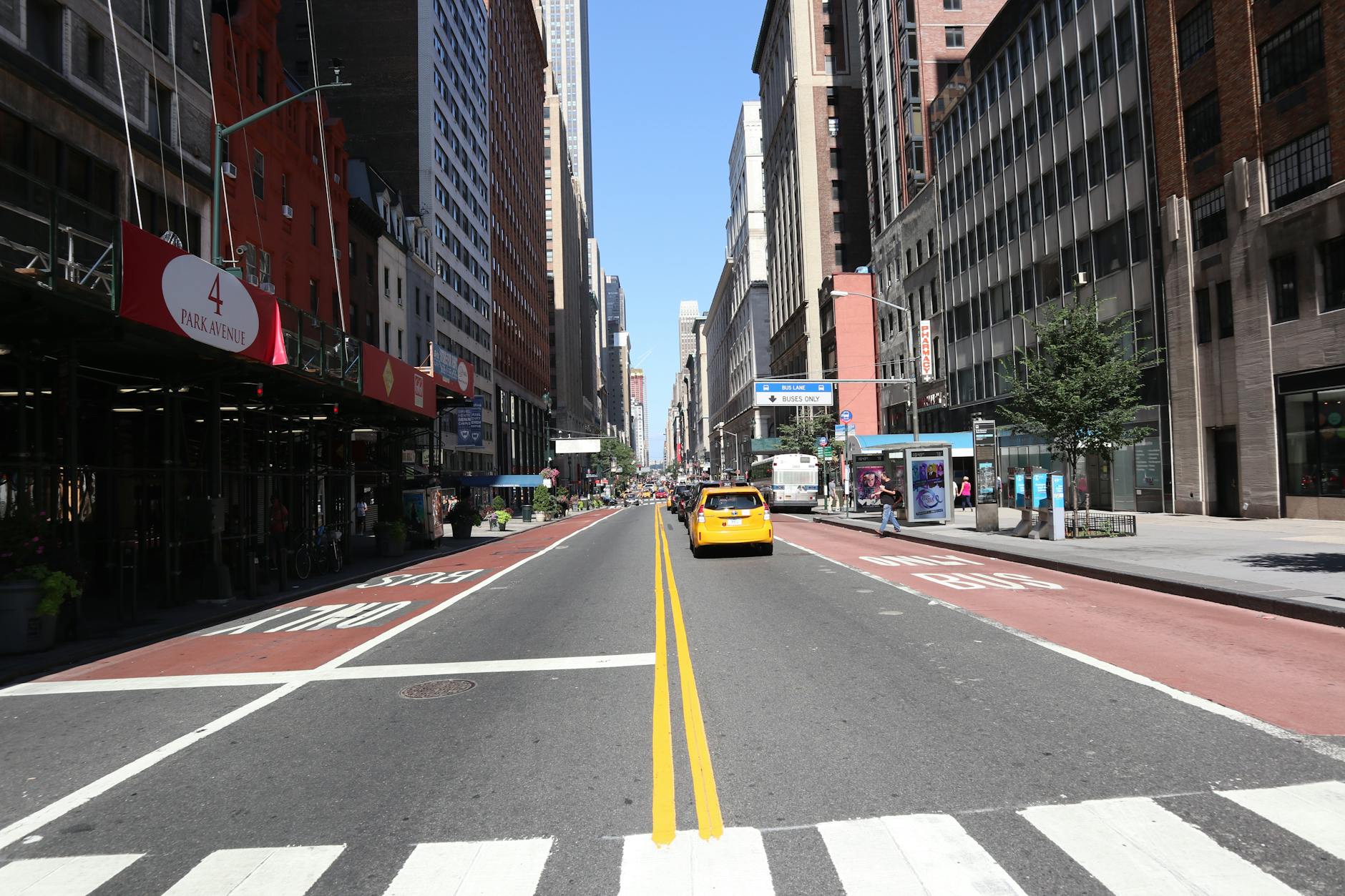
Construction crews are headed back to Flatbush Avenue before the end of April, resuming work on center-running bus lanes that could finally make Brooklyn’s most battered transit corridor worth riding again.
The New York City Department of Transportation plans to restart in the last week of April, picking up installation of dedicated bus lanes along Flatbush between Livingston Street and Grand Army Plaza. DOT first broke ground on the segment between Livingston and State Streets last fall. Winter shut things down. Spring didn’t.
The scope here is real. Beyond the lanes themselves, the project includes six concrete boarding islands, nearly 29,000 feet of new pedestrian space, 14 bike parking areas, and eleven dedicated loading zones. DOT will run the work in four phases, rebuilding one side of Flatbush at a time so two-way vehicle traffic doesn’t grind to a halt. Expect crews through summer and into fall.
The 132,000 daily riders on this corridor have been waiting long enough.
Bus speeds on Flatbush can sink to four miles per hour. Four. That’s barely faster than walking. DOT Commissioner Mike Flynn didn’t sugarcoat it. It can “Often be as fast to walk as it is to take a bus on Flatbush Avenue, and with over 100,000 riders relying on the bus to get around, that must change,” Flynn said. A 2024 survey from the Riders Alliance found 91 percent of riders reported delays on the avenue in 2023. That’s not occasional bad luck. That’s what the corridor has been for years.
The lanes will primarily serve the B41, one of Brooklyn’s most heavily used routes, along with the B67, B69, B63, B45, and B103. Enforcement will come from bus-mounted cameras run by the MTA and fixed cameras operated by DOT. Drivers who treat the bus lane as a personal shortcut can expect a bill.
Mayor Zohran Mamdani tied the project to something bigger than concrete and paint. “These center-running bus lanes will give New Yorkers back something precious: time with their families, time at work, time in their communities,” he said. “Long waits and unreliable service are not inevitable. They are the result of political choices. Today, we are choosing a system that puts bus riders first and builds safer streets for everyone.”
That framing matters in a city where bus lane projects have died quietly for years, killed by parking interests, community board opposition, or just mayoral indifference. This one’s moving. Reporting from amNewYork confirmed the April restart timeline.
The boarding islands deserve attention. They pull waiting riders off the curb lane and onto a protected concrete platform, which changes how drivers and pedestrians interact at stops. That’s not a cosmetic change. It’s the kind of street geometry that’s shown up in injury reduction data going back to 2022 bus corridor studies. Riders Alliance organizer Jolyse Race said what a lot of regular B41 riders don’t have the platform to say: “Dedicated lanes down the center of the spine of Brooklyn show us the respect and dignity we deserve.”
The timeline for this project didn’t arrive fast. DOT started building the case in 2022, and the data it compiled through 2023 and into 2024 made the congestion picture hard to argue with. A corridor that carries well over 100,000 people every day shouldn’t be losing ground to foot traffic. It’s been doing exactly that.
Construction won’t be painless. Four phases means months of partial lane closures, rerouted loading, and noise. Property owners along Flatbush will have complaints. They always do. But the alternative is a corridor that’s been failing its riders for a generation and doesn’t have to.
None of the scheduled work is contingent on anything. DOT says construction is set to proceed.