
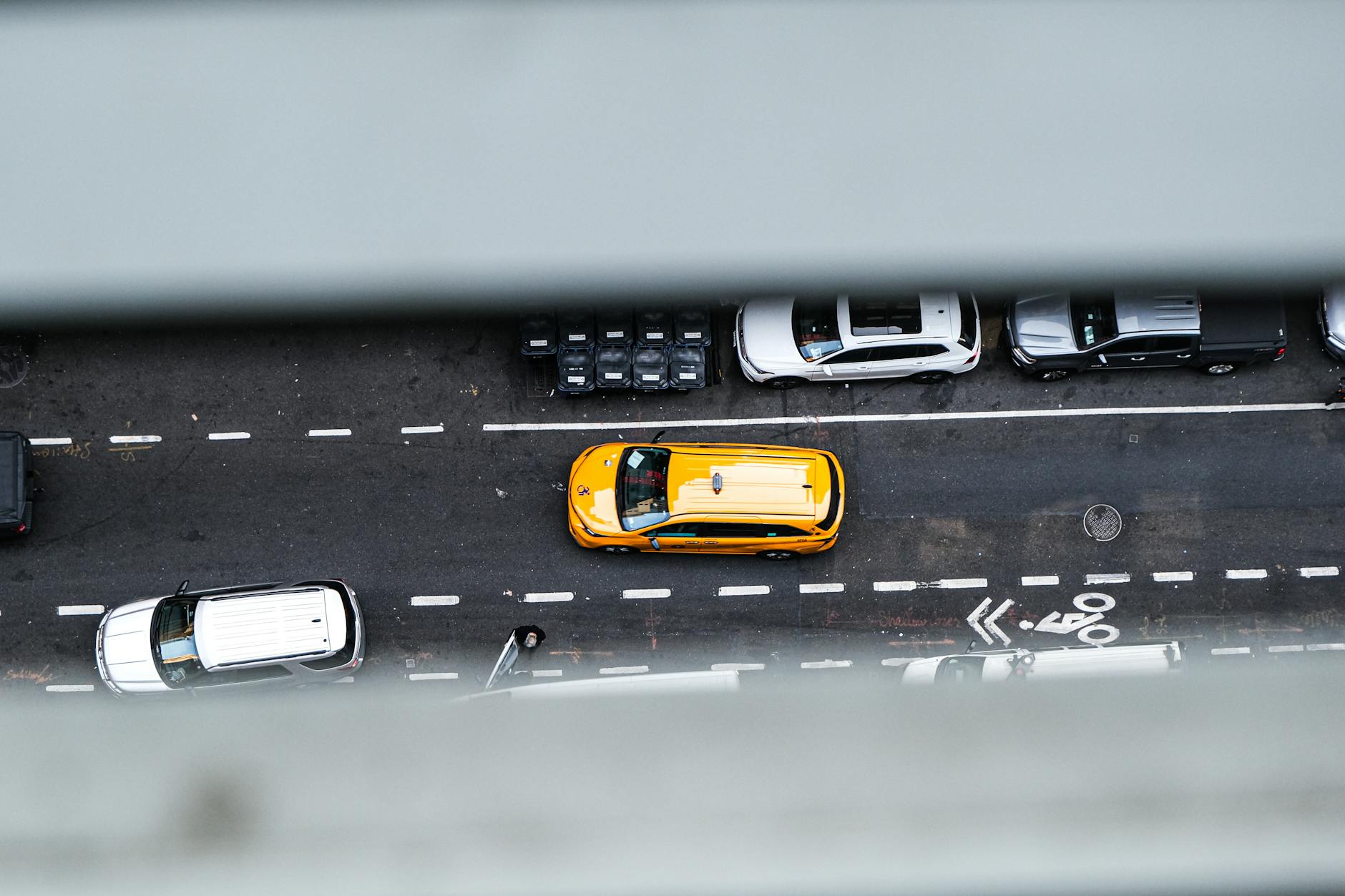
Bakary Kane had 6,500 reasons to think the green cab business would work out. It didn’t.
Kane was parked outside the Harlem-125th Street Metro-North station on a Monday, working a shift he said stretches all seven days of the week just to pay his bills. “But now I will say that turning green was maybe the worst decision I ever made,” he told The City.
The Boro Taxi program launched in 2013 with a genuine purpose. Yellow cabs weren’t going to Northern Manhattan, weren’t crossing into The Bronx, weren’t making it out to Outer Brooklyn. Green cabs were the fix. For a minute, it looked like it might work.
That minute’s over.
Taxi and Limousine Commission data released in 2026 shows only 539 active green cab drivers as of February. Back in May 2015, that number was 7,521. You don’t need a calculator to see what’s happened, but the math still stings: a drop of nearly 93% in just over a decade. Daily trips have cratered even harder. Green cabs logged an average of 1,304 trips per day in February, compared with 57,637 trips per day at the May 2015 peak. That’s a 98% collapse in ride volume. The fleet size tells the same story. Only 522 green cabs were on the road in February 2026, which is actually fewer than the 671 that were still running during April 2020, when New York City was locked down and the streets were empty.
It’s gotten worse than the pandemic. That’s not a metaphor. It’s the data.
Nancy Reynoso was there at the start. She became the city’s first green cab operator in the summer of 2013, and she kept at it for nearly a decade before finally stepping away in March 2022. She’s now working at LEGOLAND New York Resort in Orange County and carrying mail. When someone told her the February 2026 numbers, she couldn’t believe the count was that high. “I was shocked to find out that there are even that many,” Reynoso said.
The revenue picture is just as bad. At the May 2015 peak, green cab drivers were averaging $114 a day in trip revenue, which worked out to $862,099 across all drivers on a given day, not counting tips. By February, that figure had fallen to roughly $52 per driver per day. Kane works every day of the week and he’s still just covering his bills.
Syed Kabir, 52, came to the United States from Bangladesh and has driven a green cab since 2014. He has three kids. He was pretty direct about the economics. “The starting time was good, but now it’s very bad,” Kabir said. “No, no, no, no good business.”
The Boro Taxi program was always racing against a clock it didn’t know was ticking. Uber and the broader app-based ride-hailing industry were already expanding into the outer boroughs in 2013 and 2014, right into the neighborhoods green cabs were designed to serve. By 2015, the street hail business that green cabs depended on was already softening. Green cab drivers can now accept pre-arranged trips through ride-hailing apps and for-hire vehicle bases, but that change hasn’t done much to slow the decline. High-volume for-hire vehicles have recovered far larger shares of their pre-pandemic ridership than green cabs have managed.
The numbers from 2020 through 2022 were bad. The numbers from 2026 are somehow worse.
Kane’s still out there, parked in Upper Manhattan, waiting for a street hail that may not come. He drove seven days last week. He’ll drive seven days this week. The green cab on his roof once meant something specific about which neighborhoods got served and who was doing the serving. Now it’s mostly just a color.