
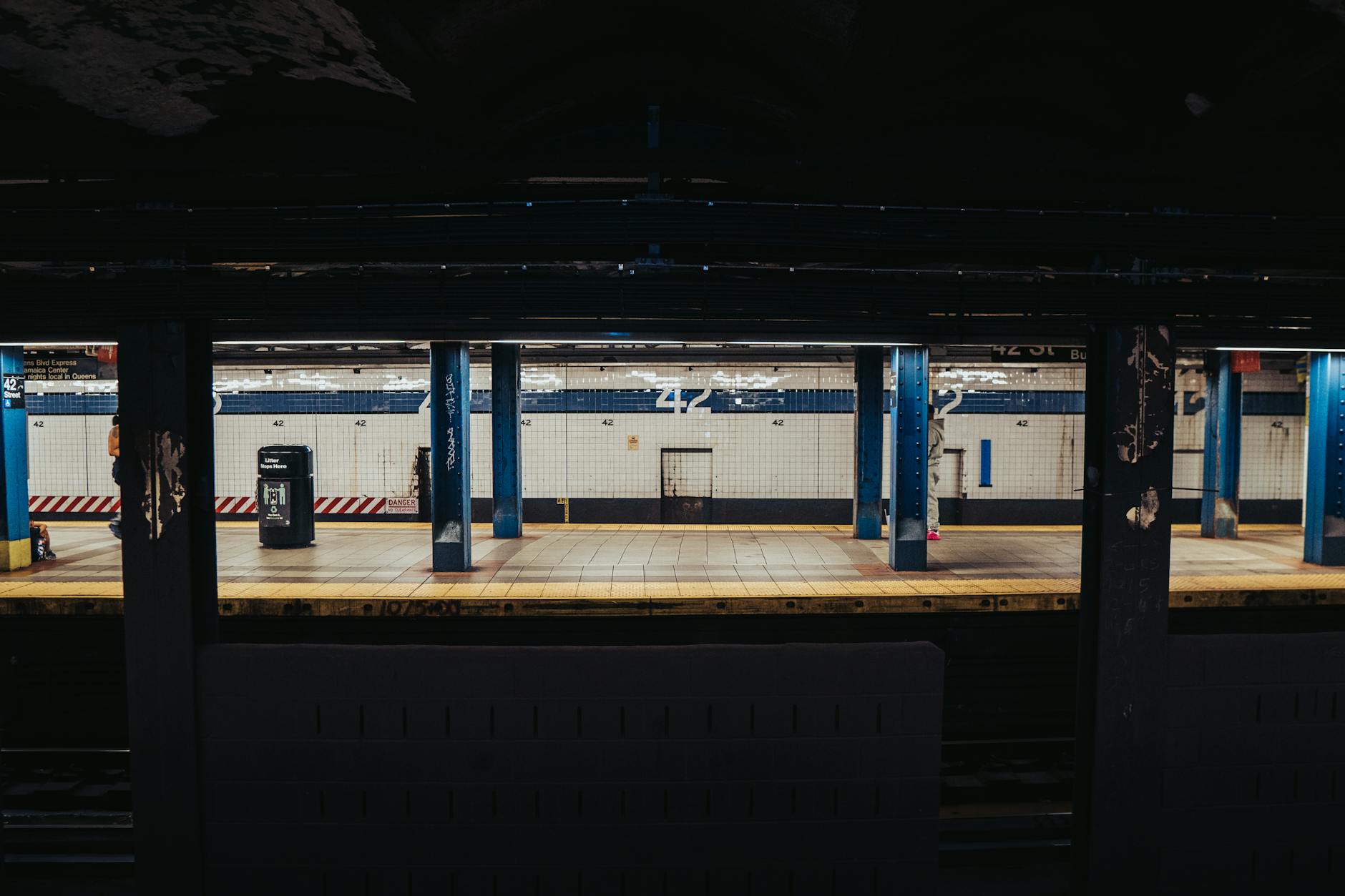
G train riders in Brooklyn and Queens are looking at a rough few weeks. The MTA announced Thursday that a string of service cuts will hit the crosstown line this month as crews press ahead with a signal overhaul that’s been decades in the making.
The disruptions aren’t minor. They range from overnight reroutes to full shutdowns of the line’s busiest stretch, with shuttle buses stepping in where trains won’t run.
Start with this weekend. From 11 p.m. Friday through 5 a.m. Monday, the G won’t terminate at its usual southern end. Instead of stopping at Church Avenue, trains will continue south along the F line all the way to Coney Island-Stillwell Av. The MTA’s marketing team went ahead and named the extension “G to the sea.” Take that however you want.
It’s a decent consolation for weekend riders. The harder news hits Monday.
Between April 13 and April 15, G service will be cut entirely between Court Sq in Queens and Bedford-Nostrand Avs in Brooklyn. That’s the spine of the line for anyone commuting out of Greenpoint or Long Island City. T403 shuttle buses will cover that segment during both service gaps. The same suspension returns from April 20 through April 24, same stations, same shuttle arrangement.
The weekend of April 17 brings its own version of misery. From 9:45 p.m. that Friday through 5 a.m. on April 20, shuttle buses again replace G trains on the Court Sq to Bedford-Nostrand Avs run. During daytime and evening hours across that window, the G will operate every 10 minutes between Church Av and Bedford-Nostrand Avs.
Why is the MTA doing this now, all at once?
The short answer is that the G’s signal system is ancient. The agency hasn’t touched it in close to 100 years. That’s not a misprint. The existing hardware is analog, and analog systems can’t tell a controller exactly where a train is sitting on the track. They only register whether a fixed block of track is occupied or empty. Nothing more precise than that.
The upgrade replaces that old equipment with communications-based train control, or CBTC. The technology lets trains track their own positions and speeds in real time and share that data continuously. Because controllers know exactly where every train is, they don’t need to keep as much space between them. Trains can safely run closer together, which means shorter gaps between service and faster travel times overall.
“CBTC has already made a measurable difference on the L and 7 lines,” an MTA spokesperson said, pointing to those lines as proof the technology delivers.
The MTA started shutting down G service in phases during the summer of 2024 to get the bulk of the modernization work done. These April disruptions are a continuation of that same push, not a new project.
Signal work across the subway system is covered under the MTA’s $68 billion five-year capital plan, which sets aside dedicated funding to replace aging infrastructure throughout the network. The G’s overhaul is one slice of that investment.
amNewYork first reported the full schedule of changes earlier this week.
Riders can expect at least 15 days of disruption spread across the month, with the segments between Court Sq and Bedford-Nostrand Avs taking the worst of it. The 7 and L lines are both examples of what the G could look like once the work wraps up: faster headways, more reliable service, fewer signal delays.
For now, though, it’s shuttle buses and patience. Anyone who depends on the G between Greenpoint and Long Island City should budget extra time on the 13 days of planned shutdowns and check the MTA’s status page before heading out.