
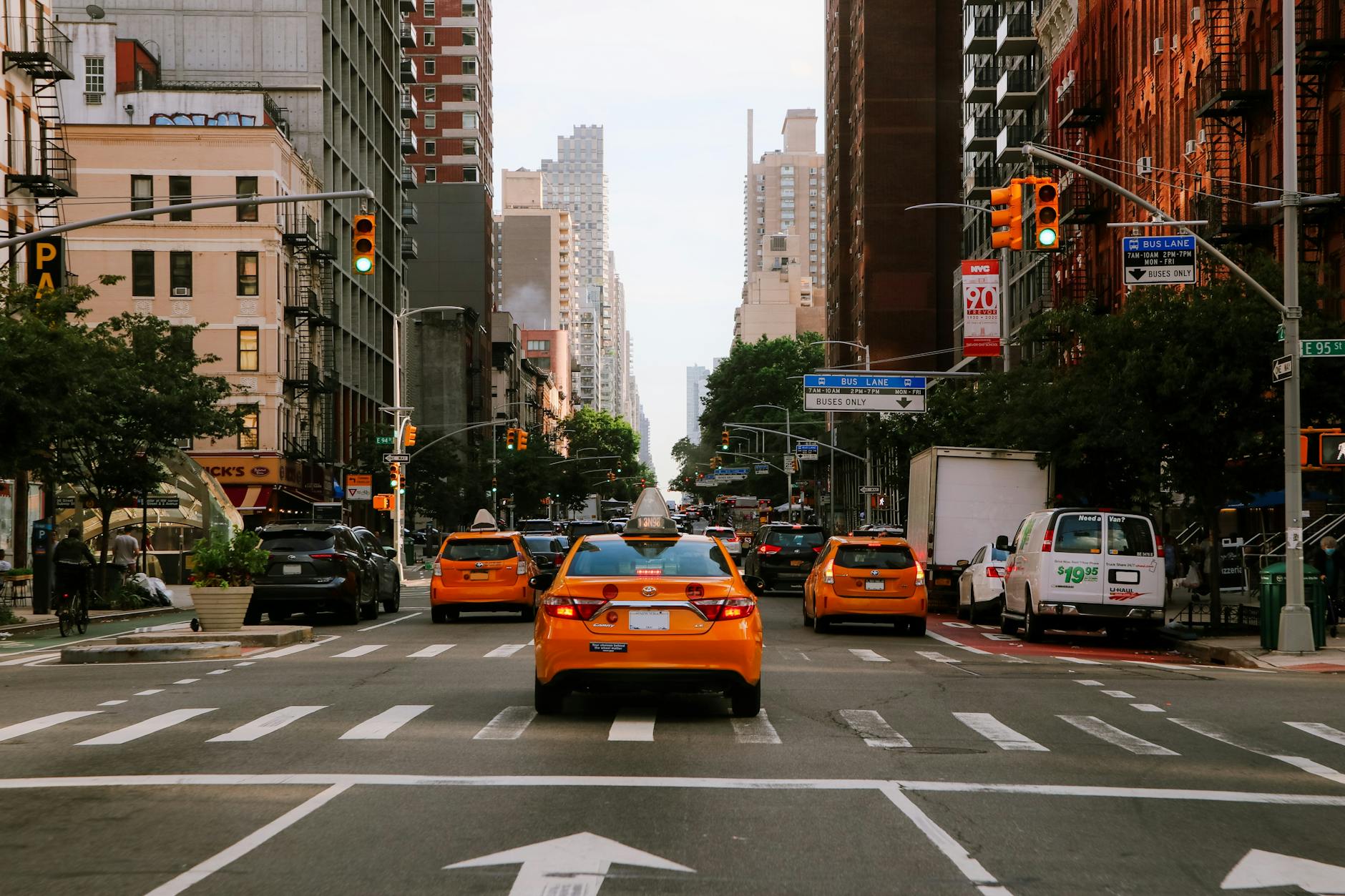
Congestion pricing revenues are now scrubbing diesel pollution from South Bronx air, and Governor Kathy Hochul on Wednesday put concrete numbers to exactly how much.
The Metropolitan Transportation Authority and the New York City Department of Transportation have swapped out 20 diesel-powered transport refrigeration units at the Hunts Point Produce Market for clean diesel or hybrid models, funded directly by tolls collected through the MTA’s congestion pricing program. The equipment change sounds like a procurement footnote. It isn’t.
Replacing a single diesel transport refrigeration unit cuts particulate matter emissions equal to pulling 330 trucks off the Cross Bronx Expressway every day. Multiply that by 20 units and you’re removing the equivalent of 6,600 trucks daily from a corridor that’s been choking the borough since Robert Moses carved the expressway through South Bronx neighborhoods in the 1950s. The first batch of replacements will cut annual nitrogen oxide emissions by 66%, particulate matter by 99.7%, hydrocarbons by 96.8%, carbon monoxide by 97.8%, and carbon dioxide by 15%. Those aren’t forecasts. That’s the rated performance of the new equipment.
“Congestion pricing has been a once-in-a-lifetime success story, leading to cleaner air, better transit and faster and safer traffic throughout the city,” Hochul said.
MTA Chair and CEO Janno Lieber was blunter. “Congestion pricing is here and it’s working, less traffic, cleaner air, in the Bronx as well as Midtown Manhattan,” he said. Lieber added that the refrigeration units were “just the first of many clean air investments to come.”
The Bronx didn’t stumble into being one of New York City’s most polluted boroughs. The Cross Bronx Expressway, built in the 1950s, runs within blocks of schools and apartment buildings. Asthma rates in the Bronx rank among the worst in the state. Hochul called these communities “neglected for far too long,” which is accurate, if also a diplomatic way to describe decades of policy choices that stacked industrial traffic and diesel exhaust onto the same zip codes.
Hunts Point itself is central to why the air there gets so bad. The market operates around the clock, drawing a constant stream of refrigerated freight trucks through residential streets. It’s one of the biggest food distribution hubs on the planet, serving roughly 10 million people across the New York region. There’s no quiet overnight window. The trucks don’t stop.
The refrigeration unit swap didn’t happen in isolation. New York State Department of Transportation Commissioner Marie Therese Dominguez pointed to the $1.7 billion Hunts Point Access Improvement Project, which she said had already diverted 13,000 trucks off local streets each day by constructing a direct access route into the market. The new clean units stack onto that investment. Dominguez said the combined effect has drawn housing and economic development to the area while opening new access to the Bronx River, Starlight Park, and Concrete Park.
Reporting from amNewYork and local Bronx outlets confirmed the Wednesday announcement and the scope of the refrigeration replacement program.
Worth noting: congestion pricing didn’t start in 2026. The program launched in 2024, and this is among the first wave of environmental investments tied directly to toll revenues. Lieber’s comment about TRUs being “just the first of many clean air investments to come paid for by tolling revenues” signals that the MTA and the state see Wednesday’s announcement as an opening move, not a conclusion.
The political context matters too. Congestion pricing spent years getting killed, revised, delayed, and threatened before it finally went live. Hochul herself briefly tried to pause the program before it took effect. Now her office is out front claiming credit for it. That’s how Albany works.
What’s next: the MTA hasn’t released a full schedule for additional clean air investments from toll revenues, but Lieber’s statement makes clear more are coming. South Bronx advocates have spent years pushing for exactly this kind of direct environmental return from the tolling program. Wednesday’s announcement is the first tangible proof they’ve got something to show for it.