
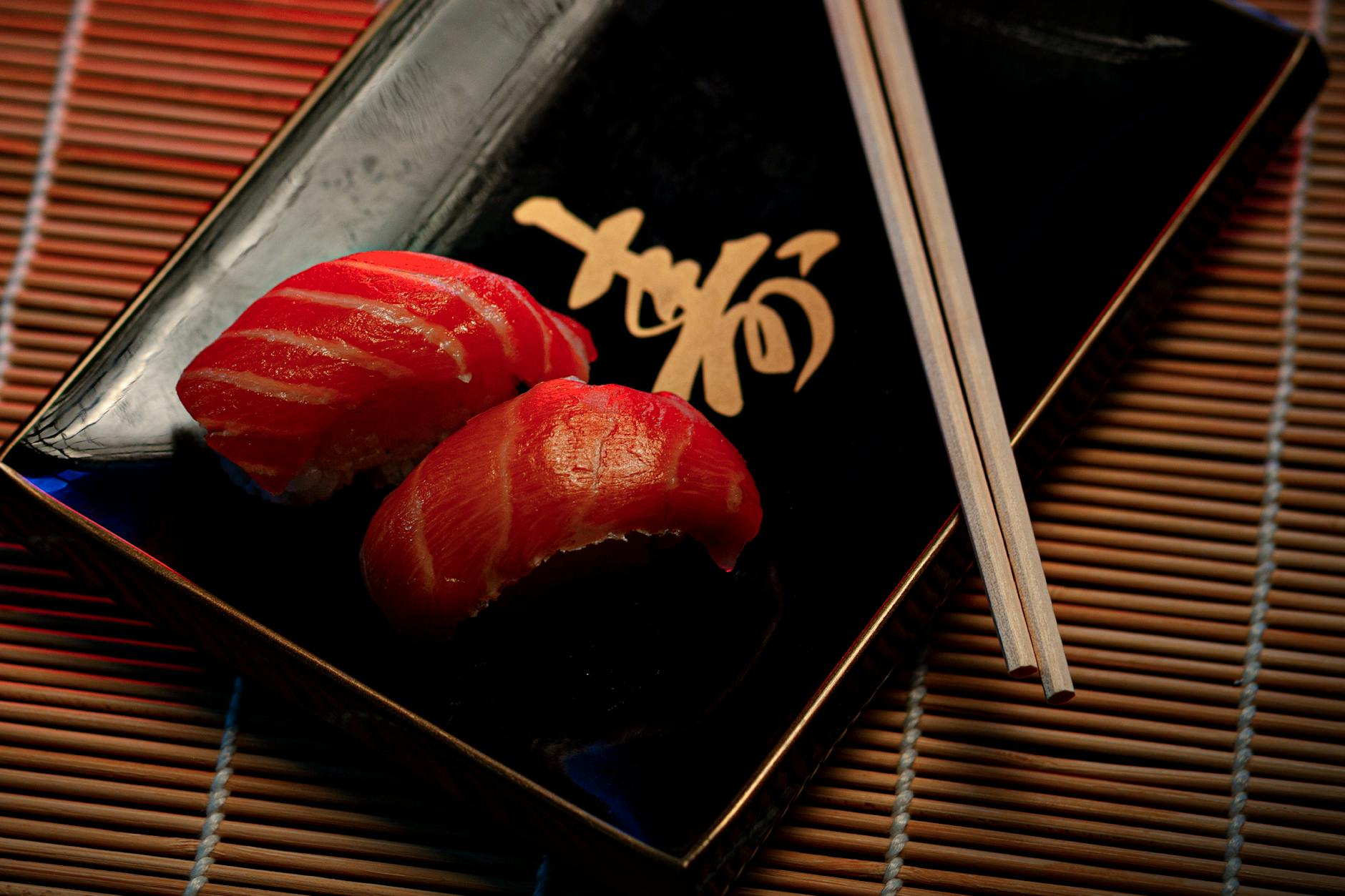
Sushidokoro Mekumi closed before it turned six months old. That’s the short version.
Hajime Kumabe’s eight-seat counter at 70 Charlton Street, tucked between Hudson and Varick in Hudson Square, went dark sometime before April 8. The restaurant’s farewell was a single line posted in response to reservation inquiries: “Due to unforeseen circumstances, we are currently unable to continue operations.” The website’s gone. Calls don’t get answered.
Blogger the Sushi Legend broke the news first, reposting the restaurant’s message after guests couldn’t reach the space.
Mekumi wasn’t a casual sushi spot. It was the New York outpost of a revered omakase tradition from Ishikawa Prefecture, Japan, brought here by Kumabe, who trained under Takayoshi Yamaguchi, the master chef behind the original restaurant back in Japan. The format was eighteen courses for $300 per person, two seatings a night, in a windowless room so small it barely qualified as a restaurant in the New York sense of the word.
The fish came from the western coast of Japan’s Sea of Japan, sourced from the Ishikawa region specifically. Snow crab. Yellowtail. Cold-water fish that don’t swim anywhere near New York Harbor. During winter, Kumabe ran a separate snow crab tasting menu priced at $888 per person. That number raised eyebrows, but the crab flew in weekly from Japan, and weekly air freight for premium seafood isn’t cheap. Sake from Kokuryu Brewery completed the experience. It was, by any measure, one of the more serious Japanese dining operations the city had seen open in 2026.
It didn’t make it to April 12.
What happens to Bar Maeda, the on-site bar led by Yoshikatsu Maeda of Tokyo’s Mori Bar, isn’t clear either. That phone rings out too.
The closure fits a pattern New York’s fine dining watchers know well. Hyper-specialized omakase operations carry brutal overhead. Imported seafood margins are thin by definition. Eight seats, $300 a head, two seatings a night: you can do the math and it’s not a lot of room for error. A soft week, a problem shipment, an unexpected expense, and the numbers can fall apart fast. The restaurant hasn’t said what “unforeseen circumstances” actually means, and it probably won’t.
Eater New York tracked the closure alongside several other April 2026 shutdowns.
The East Village lost something more familiar the same week. Dim Sum Palace, the fast-growing Cantonese chain that’s been expanding across Manhattan for years, closed its location at 59 Second Avenue on Sunday, April 12. A sign on the door thanked eight years’ worth of customers for their “support, trust and kindness.” Five other Manhattan locations stay open, so the brand’s not folding. It’s one location. But the regulars who built a Sunday morning routine around that corner spot don’t have the same option anymore.
Then there’s Brooklyn Brine.
Shamus Jones started the pickling operation in 2010, working out of the kitchen at the now-shuttered Brooklyn Label restaurant in Greenpoint. He’s been at it for sixteen years, moving around Brooklyn, building the brand into something that got real shelf space and real fans. Now Brooklyn Brine has closed too, according to a post Jones put up online that did not go gently. He called out what he described as “stupid Nepo-boomers that vote for Trump, who exercise control over small friends and family investment,” said Jones in the post. He’s 42. He started this when he was in his mid-twenties and watched it not survive 2026.
Three closures in a single April week. One’s an ambitious Japanese import that couldn’t outlast its first winter. One’s a Cantonese chain trimming a single outer branch. One’s a Brooklyn institution going out swinging.
New York doesn’t hold wakes for restaurants. It just opens something else in the same space.